Workshop Story
Inside Our Factory: How a Meteorite Becomes Jewelry
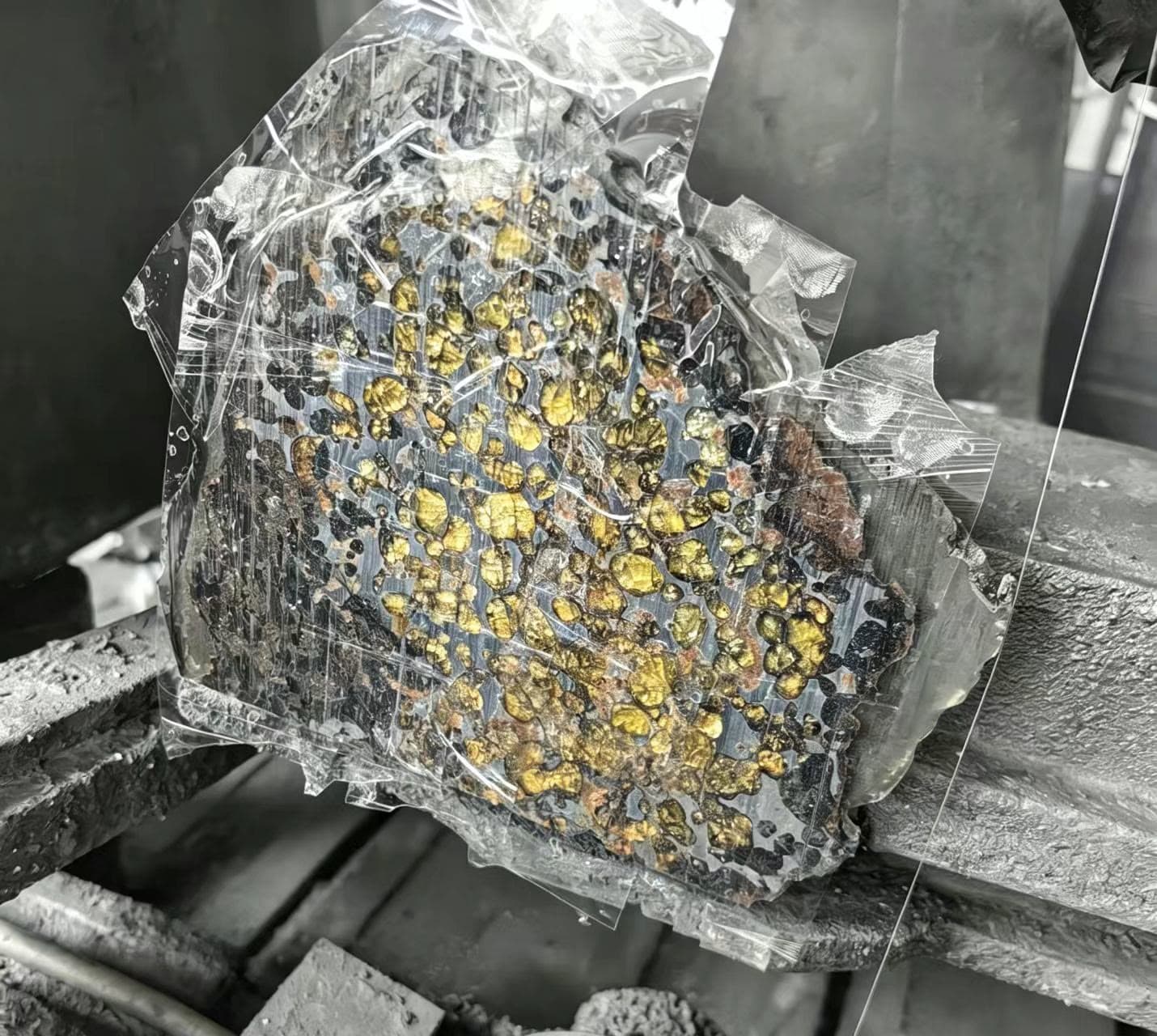
Most meteorite jewelry is finished somewhere its seller has never been. Ours isn’t. The stones we find ourselves in the desert come home to our own factory, where we cut, etch and finish every piece by hand. Here is exactly how a rough, crusted rock becomes something you’d wear.
Why we cut our own
Cutting meteorite is specialist, expensive work, and most sellers outsource it — or simply buy pieces already made. We don’t, for the same reason we hunt our own stones: control. When the same team finds the meteorite, cuts it and finishes it, nothing gets swapped, nothing gets faked, and we can put a certificate of authenticity behind every piece. It also means no middleman markup between the sky and your hand.
It starts as a rough stone
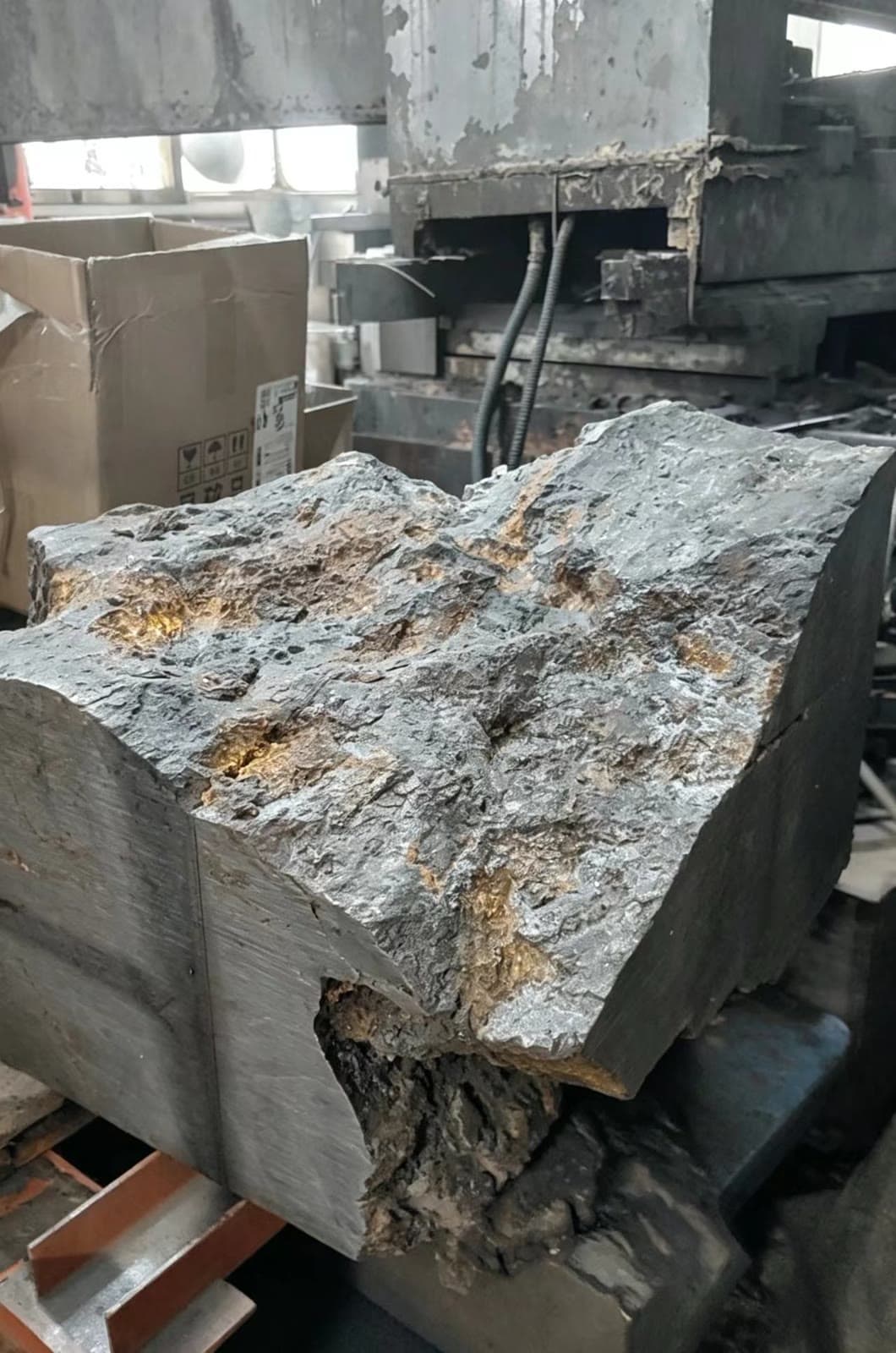
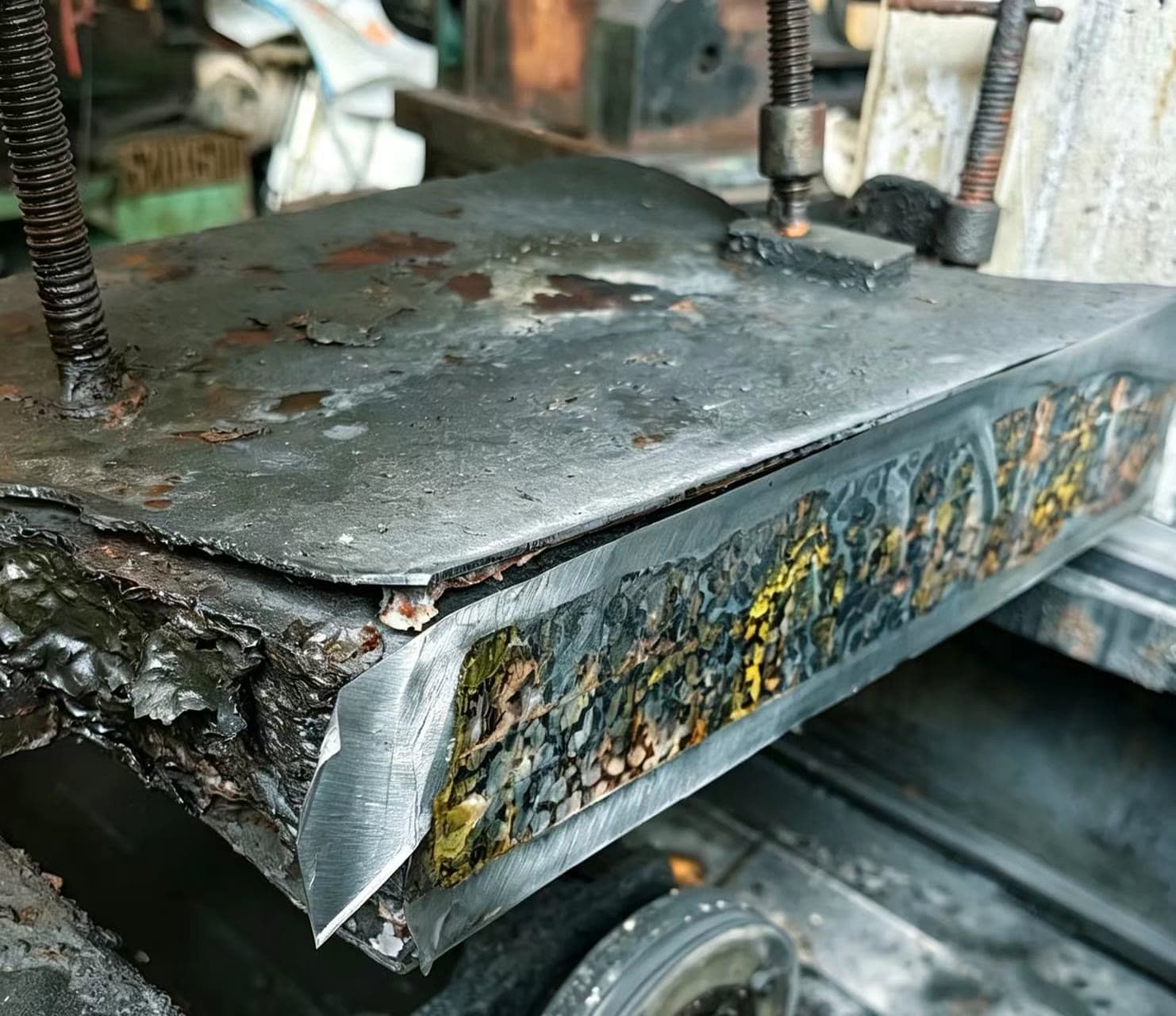
What arrives at the saw bed looks like nothing special — a heavy, grey-brown block wearing its dark fusion crust and streaks of rust, exactly as it came out of the ground. You can’t see the pattern or the olivine yet; it’s locked inside. The first decision is the most important one a cutter makes: which way to open the stone, because that choice decides what every finished piece will look like.
Cutting: slow, wet, unforgiving
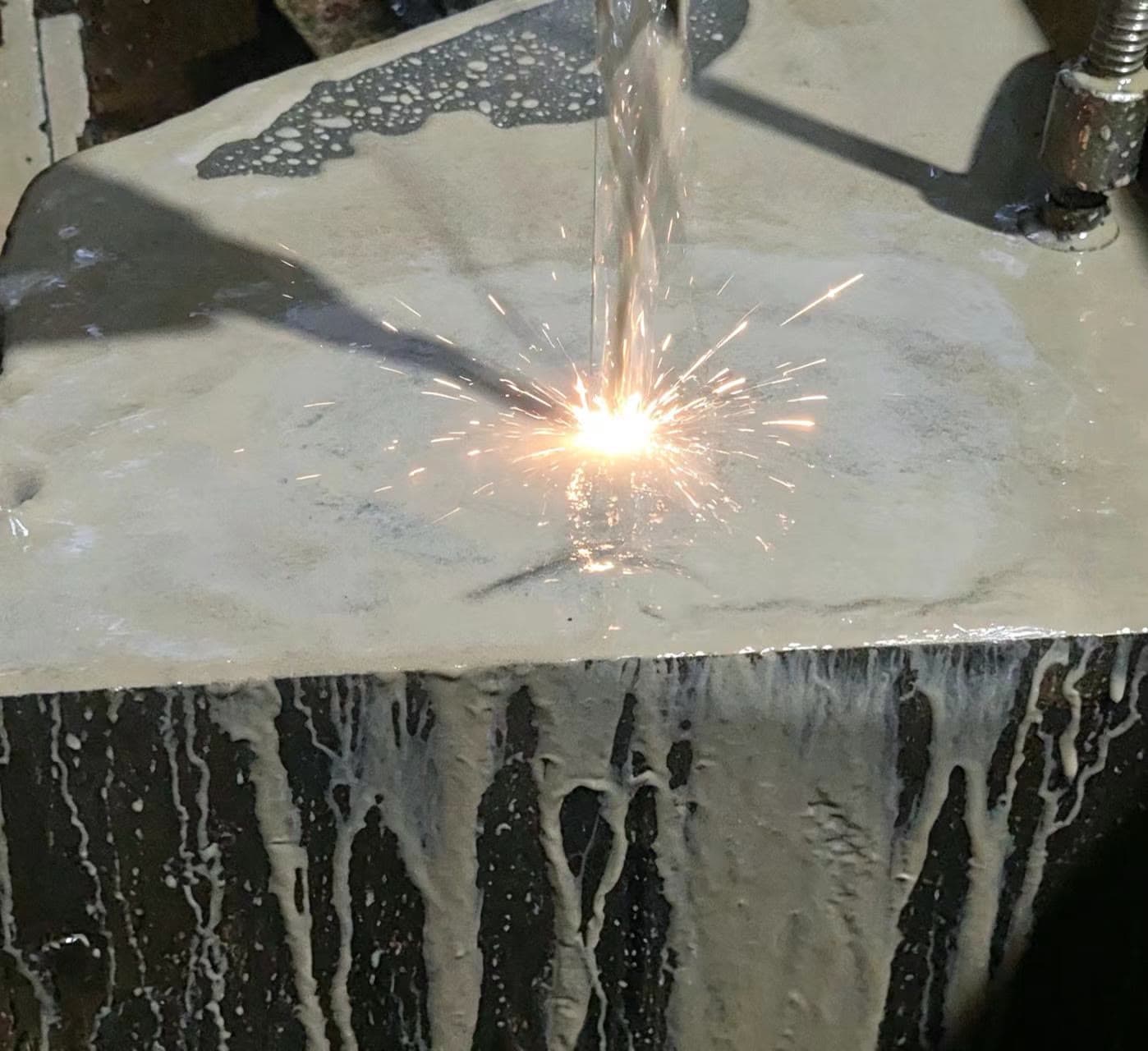
Meteoritic iron is dense and tough, so we cut with a diamond-tipped blade cooled by a constant flow of water. The blade doesn’t slice so much as crawl, throwing sparks and a slurry of iron dust, and the water keeps the stone from overheating — too much heat can damage the crystal structure or the fragile olivine in a pallasite. It is slow and unforgiving: a single wrong pass can waste a stone that took thousands of years to fall to Earth.
The moment the stone opens
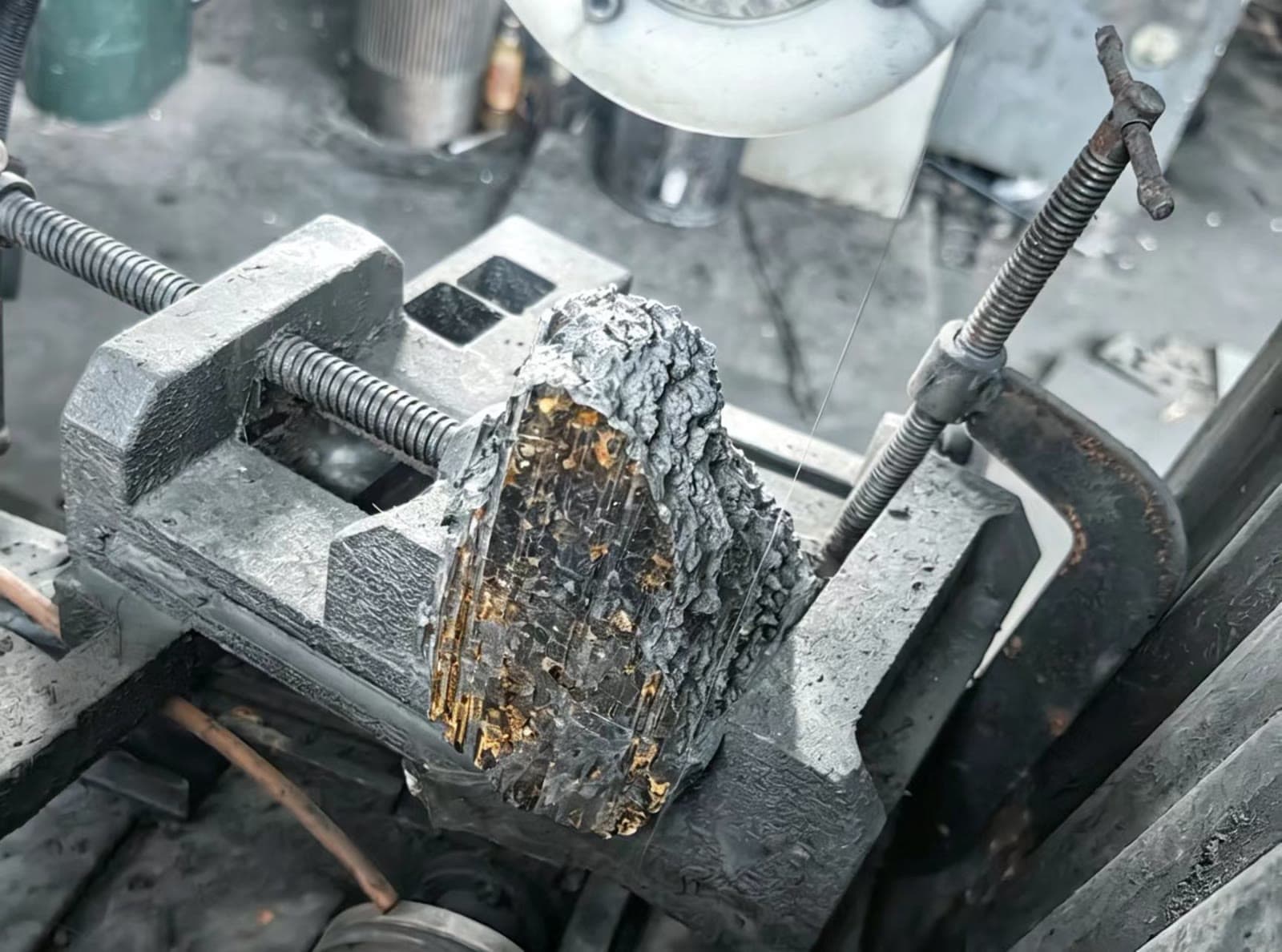
This is why we do it. When the cut finishes, the inside of the stone sees light for the first time in billions of years. In a pallasite, the face reveals olivine — gem crystals, the same mineral as peridot, suspended in a nickel-iron web from the boundary of a shattered planet’s core. In an iron meteorite, grinding, polishing and a light acid etch summon the Widmanstätten pattern — a crystalline lattice that only forms over millions of years in deep space, and that no two stones share.
Shaped and finished by hand
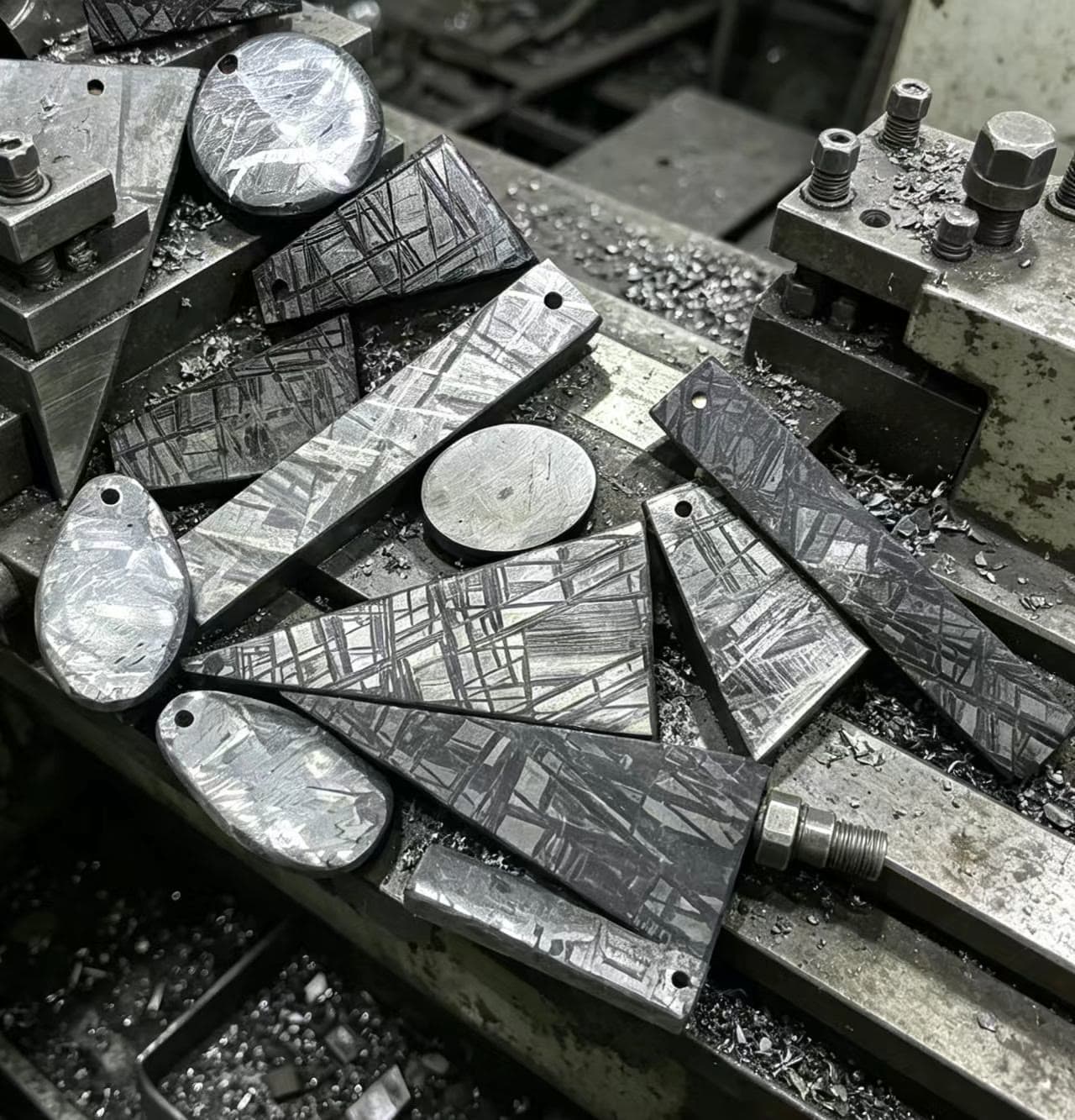
A polished slice isn’t jewelry yet. Each one is marked, shaped and drilled, then hand-finished into the ring, pendant or pair of earrings you’ll actually wear — edges smoothed, faces brought to a mirror, and the piece set or wire-wrapped. Because every slice is unique, each one is matched and finished individually; there’s no production line stamping out identical copies. The last step is always the same: it’s checked and sealed with its certificate.
What this means for you
When you wear one of our pieces, you’re wearing a specific stone that a real team walked into a real desert to find, then cut and finished with their own hands. Nothing passed through a dozen anonymous middlemen; nothing was quietly substituted. Found in the desert, cut in our own factory, finished by hand — then sent to you with its papers in order.That’s the difference you can’t see in a photo, and it’s the reason the piece is real.
Frequently asked questions
- A raw meteorite is first cut into slices with a water-cooled diamond saw. The cut faces are ground and polished, and iron meteorites are given a light acid etch to reveal the Widmanstätten pattern. Each slice is then shaped, drilled and finished into a ring, pendant or pair of earrings, and set or wire-wrapped by hand. We do every step in our own workshop.