Meteorite Science
Iron Meteorite: The Complete Guide to Space Metal

The iron meteorite is the most iconic kind of meteorite — a lump of solid nickel-iron metal from the core of an asteroid, forged 4.5 billion years ago. Cut and etched, it reveals the unmistakable Widmanstätten pattern, a crystal lattice that can only form in space. This guide covers what iron meteorites are, where they come from, how to identify one, and why they are the top choice for jewelry. It’s one of the three main meteorite types.
What is an iron meteorite?
An iron meteorite is a meteorite made almost entirely of iron and nickel metal. Unlike a stony meteorite (rock) or a stony-iron (a mix), an iron is essentially a natural metal alloy that fell from space. That is why it feels so heavy, sticks hard to a magnet, and can be polished to a mirror shine. New to meteorites? Start with what is a meteorite.
Where iron meteorites come from
Early in the solar system, some asteroids grew large enough to melt inside. The heavy metal sank to the middle and formed a molten metallic core, just like the core of the Earth. When one of these asteroids was later shattered by a collision, fragments of that core were flung into space — and the ones that eventually fall to Earth are iron meteorites. So holding an iron meteorite means holding a piece of the core of a destroyed planet.
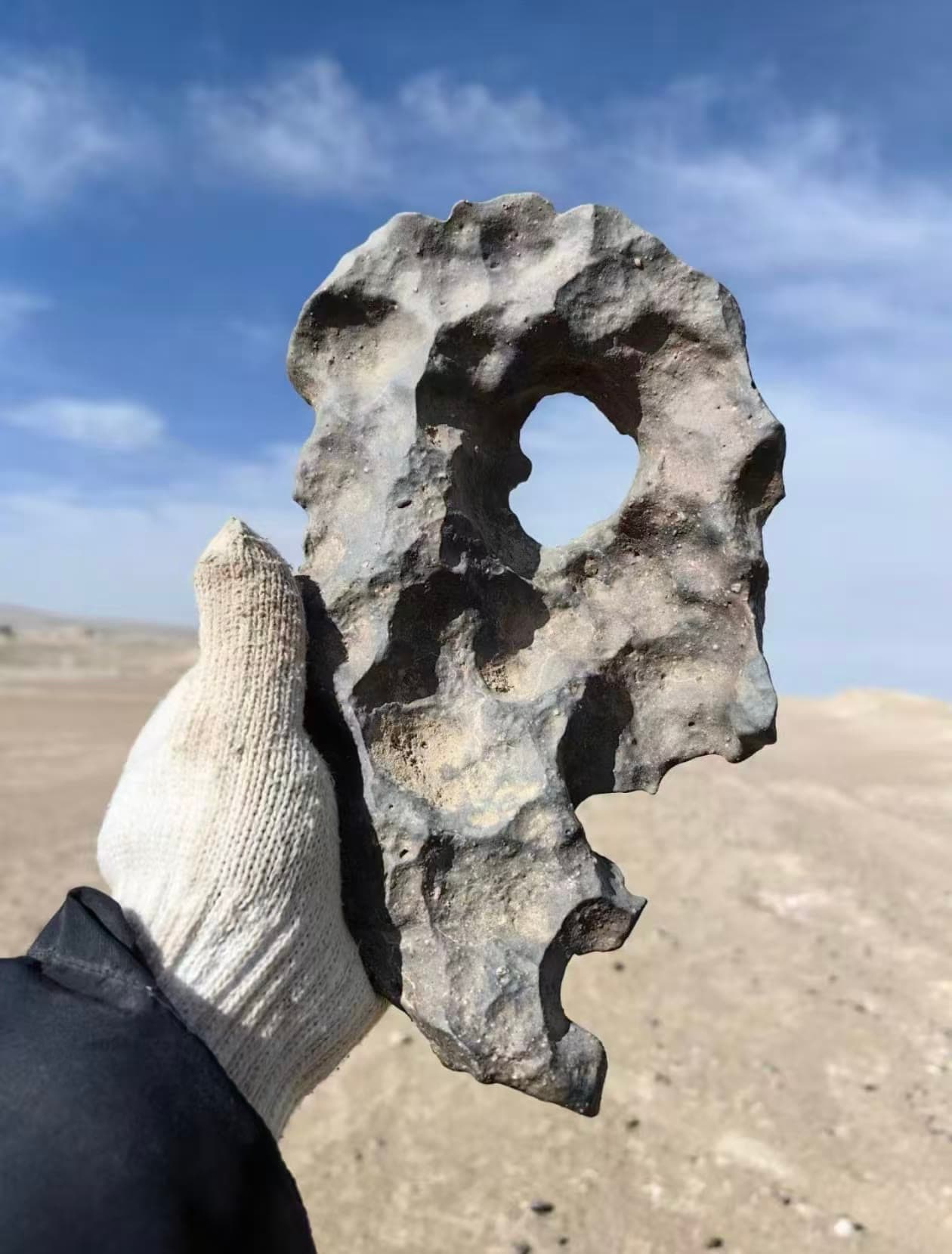
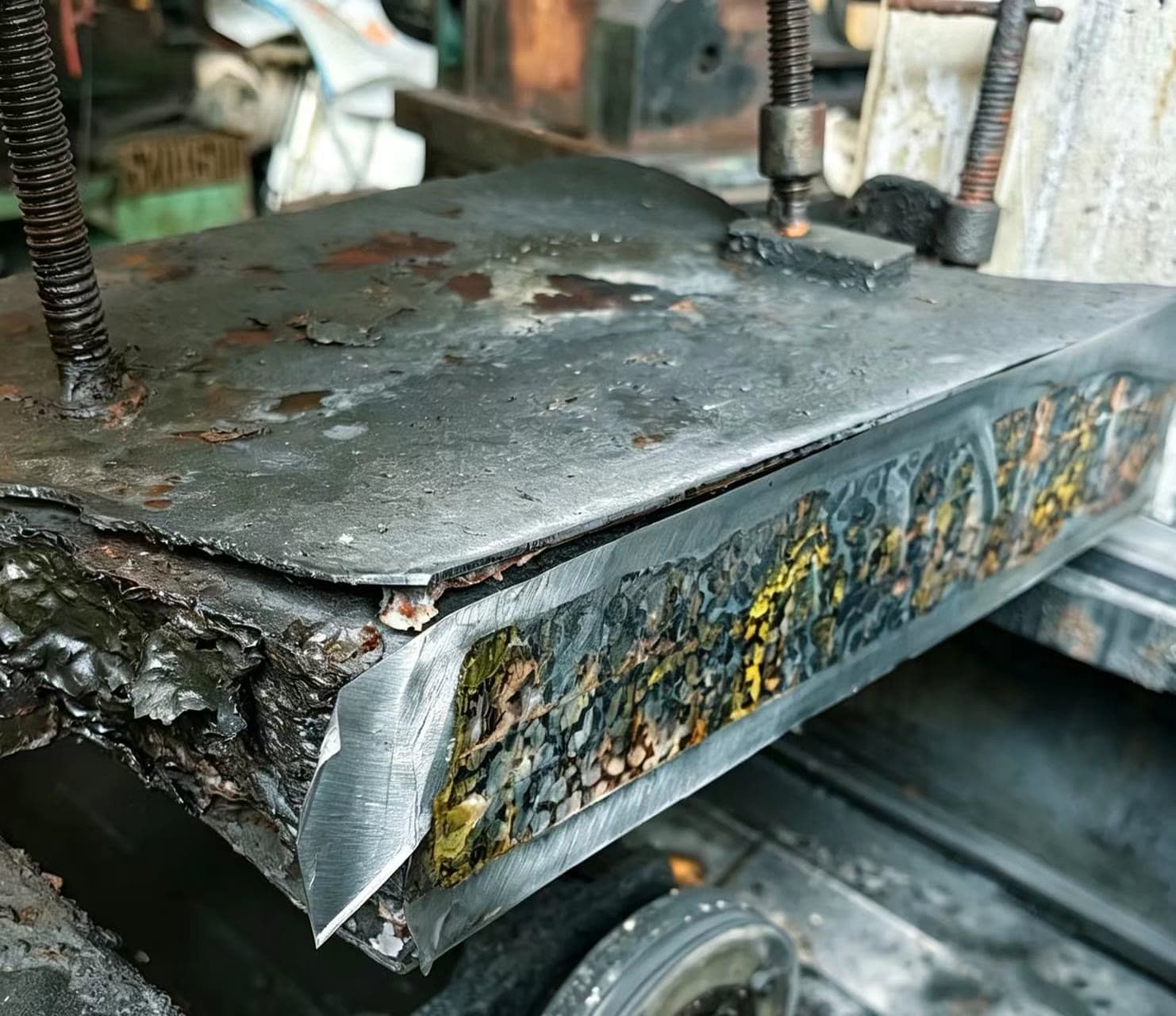
The Widmanstätten pattern
The signature of an iron meteorite is the Widmanstätten pattern — an interlocking lattice of two nickel-iron minerals (kamacite and taenite) that appears when a polished face is etched with dilute acid. It forms only because the metal cooled incredibly slowly — a few degrees per million years — deep inside the parent asteroid. That is impossible to reproduce on Earth, which is why the pattern is proof of a genuine iron meteorite. Full explainer: the Widmanstätten pattern explained.
Classes of iron meteorite
Scientists sort irons by the structure of that pattern, which depends on how much nickel they contain:
| Structural class | Pattern | Notes |
|---|---|---|
| Octahedrite | Classic Widmanstätten lattice | By far the most common; most jewelry irons |
| Hexahedrite | Fine parallel lines (Neumann lines) | Low nickel; no large lattice |
| Ataxite | Little visible structure | Very high nickel; rare |
Famous irons include Gibeon, Muonionalusta and Campo del Cielo — all octahedrites prized for jewelry.
How to identify one
- Very heavy for its size — far denser than ordinary rock.
- Strongly magnetic — a magnet grabs it firmly.
- No holes or bubbles — vesicles point to slag, not meteorite.
- Fusion crust / regmaglypts — a dark skin and thumbprint dimples on fresh falls.
- Widmanstätten pattern when a cut face is polished and etched — the clincher.
More in how to tell if a meteorite is real.
Why it’s the top choice for jewelry
Because it’s solid metal, an iron meteorite can be cut, polished and etched into something you wear every day — and the Widmanstätten pattern makes every piece unique and impossible to fake. It’s the material behind meteorite rings, pendants, earrings and display slices.

Caring for iron meteorite
Iron meteorites are metal, so moisture is the enemy. Keep them dry, handle with clean or gloved hands, store with a silica-gel desiccant, and wipe periodically with a thin film of oil or microcrystalline wax. Early surface rust lifts off with isopropyl alcohol and a soft brush. Full routine in the care guide.
Frequently asked questions
- An iron meteorite is a meteorite made almost entirely of nickel-iron metal. It comes from the molten metallic core of an asteroid that was shattered by collision. Iron meteorites are dense, strongly magnetic, and reveal a crystalline Widmanstätten pattern when cut and etched — which makes them a favorite for rings, pendants and display slices.