Meteorite Science
Mars & Moon Meteorites: Real Rocks From Other Worlds
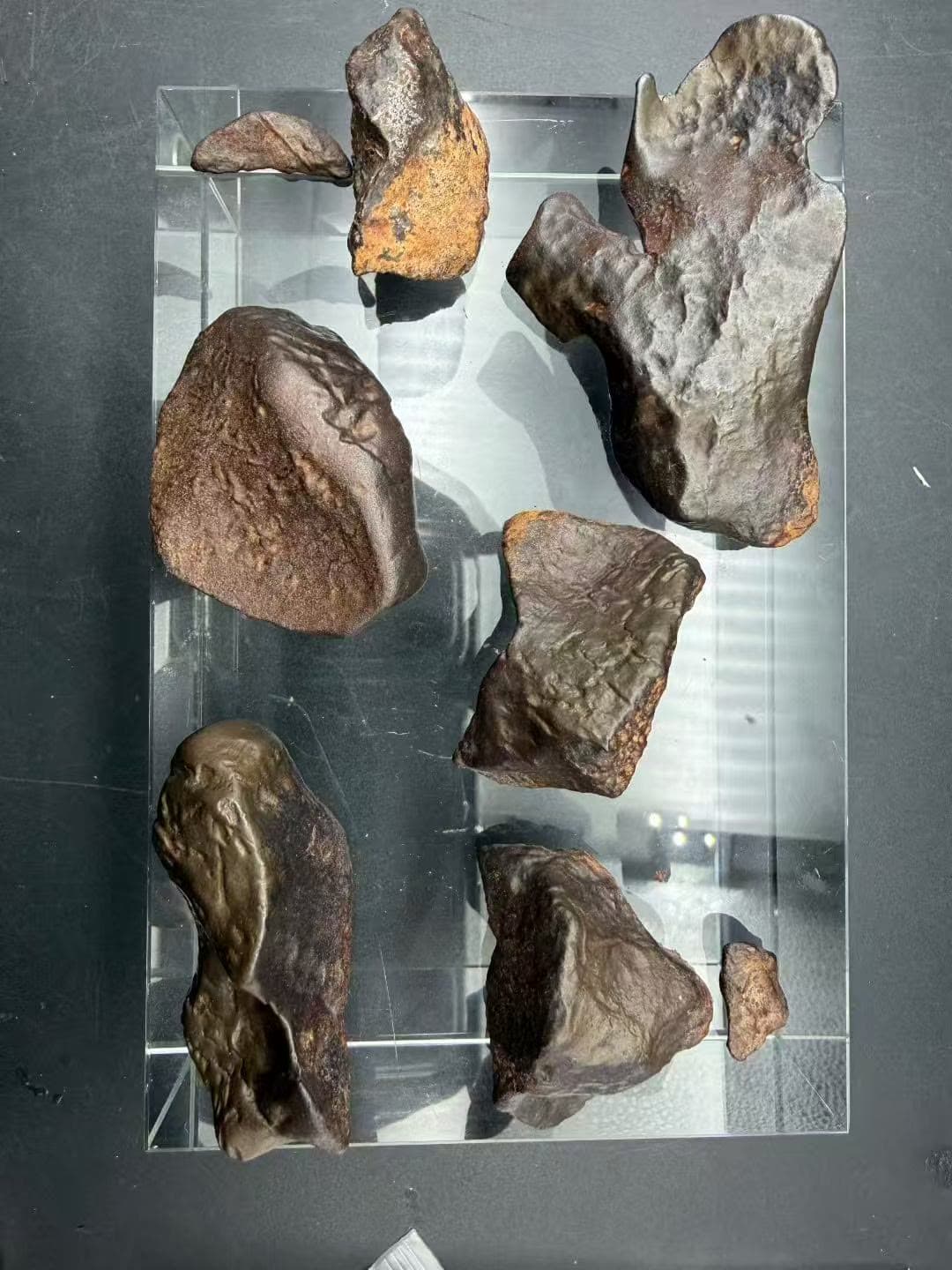
Almost every meteorite that reaches Earth is a fragment of an asteroid. But a tiny, precious few come from somewhere far more astonishing — the surface of Mars and the Moon. These are real rocks from other worlds that you can hold in your hand. Here is how they get here, how scientists prove where they came from, and just how rare they really are.
Can meteorites come from Mars and the Moon?
Yes — and it is one of the most remarkable facts in all of science. Scientists have confirmed hundreds of meteorites that originated on Mars or the Moon. They are not launched by volcanoes or spacecraft; they are blasted off the surface by asteroid impacts powerful enough to throw rock clear of the planet entirely.
How a rock escapes another world
When a large asteroid strikes Mars or the Moon, the explosion can accelerate surface rock past that world’s escape velocity— the speed needed to break free of its gravity. The ejected fragments then drift through space for thousands to millions of years until, by chance, Earth’s gravity catches one and it falls as a meteorite.
Martian meteorites
How can anyone be sure a rock came from Mars without going there? The answer is trapped gas. Some of these meteorites contain tiny bubbles of gas sealed inside them, and its composition matches the Martian atmosphere— which NASA’s Viking landers measured directly in 1976 — almost perfectly. Combined with their minerals and relatively young volcanic ages, the case is airtight.
Martian meteorites are often grouped as “SNC” meteorites — shergottites, nakhlites and chassignites, named after early examples. Most are found in the great meteorite-hunting grounds of the Sahara (Northwest Africa) and the ice fields of Antarctica, where dark stones stand out against sand and ice.
Lunar meteorites
Lunar meteorites are proven a different way: they are matched against the Moon rocks the Apollo astronauts brought home. Their composition, minerals and textures line up with those samples, so scientists can confirm they are pieces of the lunar surface — either bright highland breccias or dark mare basaltsfrom the Moon’s volcanic plains. The first recognised lunar meteorite was found in Antarctica in 1982, years after Apollo gave us something to compare them to.
How rare and valuable are they?
Out of the tens of thousands of meteorites in the world’s collections, only a few hundred are Martian and a few hundred lunar — a tiny fraction of a percent. Because they are so scarce, authenticated Martian and lunar meteorites routinely sell for more per gram than gold, and the finest pieces for many times that. Even a small, lab-classified fragment is a serious museum or collector object. For how meteorite pricing works in general, see how much a meteorite is worth.
How they are proven genuine
A genuine Martian or lunar meteorite is not an eyeball call — it is laboratory-classified and registered with the Meteoritical Society, which maintains the official database of every recognised meteorite. Because these pieces are so valuable, they are also heavily faked, so provenance and formal classification matter more here than anywhere else in the hobby. The same honesty principles apply to any meteorite — see how to tell if a meteorite is real and what a certificate of authenticity should say.
Owning a piece of space (realistically)
Martian and lunar meteorites are the rarefied, high-value end of the hobby — wonderful to read about, but specialist to own. The realistic, beautiful way for most people to hold a genuine piece of space is an iron or stony-iron (pallasite) meteorite: far more available, old as the solar system, and able to be cut and polished into something you can wear every day. Explore iron meteorite slices, gem pallasites, and the meteorite basics.

Frequently asked questions
- Yes. When a large asteroid slams into Mars or the Moon, the impact can blast surface rock off the surface fast enough to escape that world's gravity. Those fragments drift through space and, after thousands to millions of years, a few eventually fall to Earth as meteorites. Scientists have confirmed hundreds of them.