Meteorite Science
Achondrite Meteorite: Melted Rock From Other Worlds
An achondrite is a stony meteorite with a dramatic past: unlike the common chondrites, it was melted inside its parent body. The melting destroyed its chondrules — so the name means literally “without chondrules.” What is left is an igneous rock: the frozen lava and crust of an asteroid, and in the rarest cases, of the Moon and Mars. Achondrites are the second main branch of the stony meteorites.
What is an achondrite?
Picture a young asteroid big enough and hot enough to melt all the way through. The heavy metal sinks to form a core; the lighter rock rises to form a mantle and crust. This process — called differentiation — is the same one that gave Earth its layers. An achondrite is a piece of that melted rock: crust or mantle material, with its primitive chondrules long gone. It sits at the opposite end of the story from a chondrite, which never melted at all. If this is new, start with what is a meteorite.
How achondrites form
The same melting that forms an achondrite’s rock also forms the metal iron meteorites (from the core) and the stony-irons (from the boundary between the two). They are all pieces of the same differentiated worlds — just different layers.
The main groups
| Group | Comes from | Note |
|---|---|---|
| HED (howardite, eucrite, diogenite) | The asteroid Vesta | The largest achondrite group |
| Lunar | The Moon | Matched to Apollo rocks |
| Martian (shergottite, nakhlite, chassignite) | Mars | Trapped Martian gas proves it |
| Aubrite | A very dry, reduced parent body | Pale, almost colourless |
| Angrite | An ancient melted body | Among the oldest igneous rocks |
The Moon and Mars groups are the superstars — and the rarest meteorites money can buy. We cover them in full in Mars & Moon meteorites.
Achondrite vs chondrite
The single difference is melting. A chondrite is primitive, unmelted, and still full of 4.56-billion-year-old chondrules — the raw ingredients of the planets. An achondrite is those same ingredients after they were melted, separated and re-frozen into crust. Chondrites tell us what the solar system was made of; achondrites tell us what happens when a world grows large enough to come alive geologically.
How to spot one
- No chondrules — a cut face looks like an igneous Earth rock (think basalt), not a grainy sphere-studded stone.
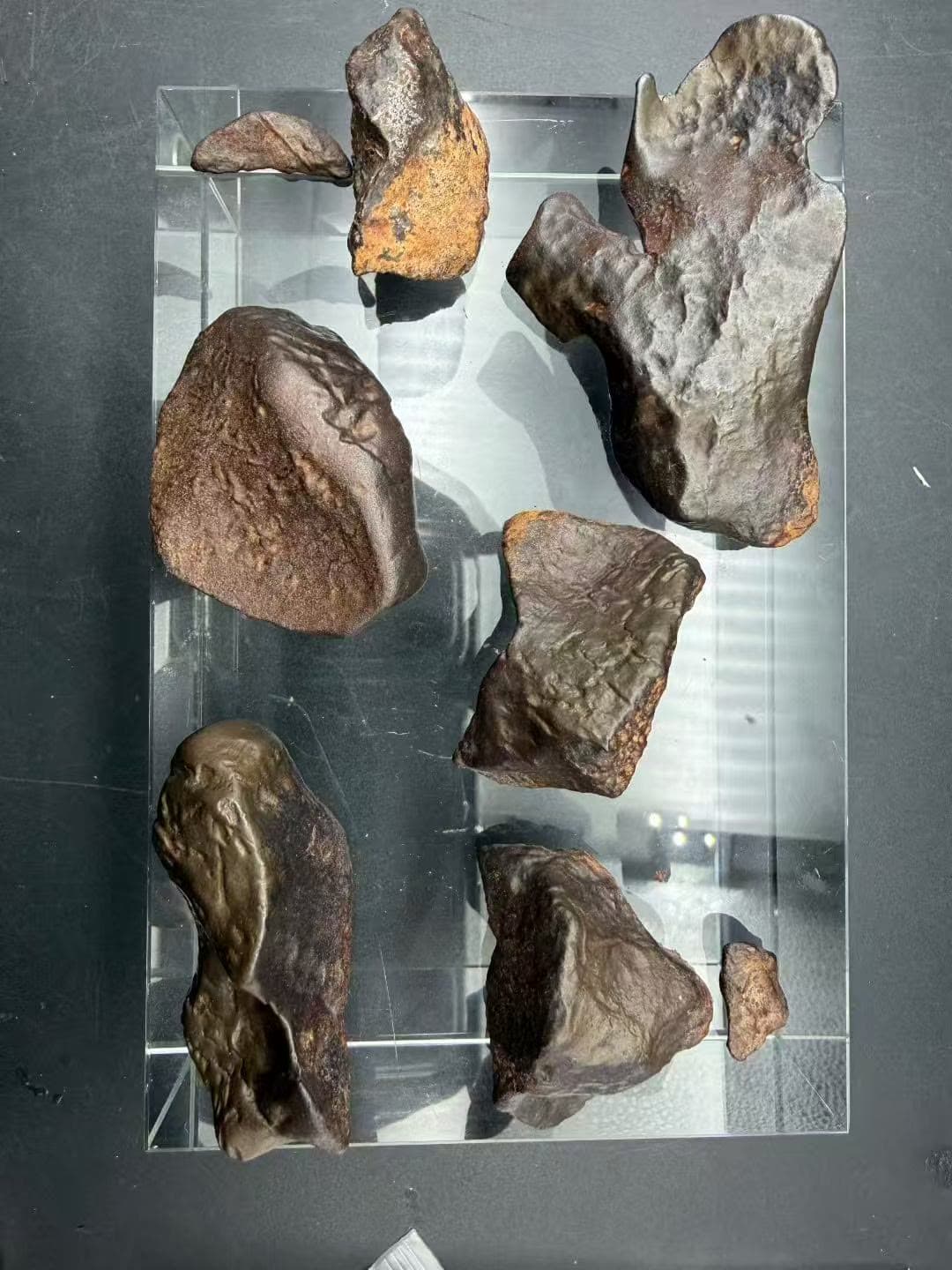
- Fusion crust — a dark glassy skin from the fall; often glossier on fresh achondrites.
- Little or no metal — most achondrites are only weakly magnetic or not at all.
- Hard to call by eye — achondrites are the meteorites most often confused with terrestrial basalt, so classification needs a lab.
Because they look so much like ordinary volcanic rock, achondrites are notoriously tricky — see how to tell if a meteorite is real.
Collecting achondrites
A classified achondrite is one of the most rewarding specimens a collector can own — genuine crust from another world, documented by a certificate. Because they are mostly rock rather than metal, they are collected as specimens rather than worn. If you want a piece of space to wear every day, an iron or a gem pallasite is the practical choice. See how all the families fit together in types of meteorites.
Frequently asked questions
- An achondrite is a stony meteorite that was melted inside its parent body, so it has no chondrules (a-chondrite literally means 'without chondrules'). Instead of preserving primitive droplets, achondrites are igneous rocks — the frozen lava and crust of asteroids, the Moon and Mars. They make up only about 8% of all meteorite falls.